Delete Style In Expression Web 3 Screenshots


Video Tutorial


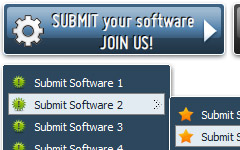
The Vista Buttons add-in for Expression Web and Frontpage allows you to create powerful dropdown menu menus, directly in Expression Web, FrontPage 2000 (version 9), Microsoft FrontPage 2002 (version 10), Microsoft Office FrontPage 2003 (version 11). Fully customizable appearance! Use one of the 500+ web buttons, 100 submenu designs, 6600+ icons, 50 ready-made samples, or create your own using the theme editor. With support for custom images, icons, colors, font styles, the possibilities are limitless. You'll create really nice looking website html menus and html buttons with little or no design skills at all! Create, insert, modify a website menu without leaving your favorite web development environment!


Menu, Button, and Icon Collection

Expression Web Menu provides huge collection of 1400 web buttons, 6600 icons, 300 ready-made samples, so you'll create really nice looking menus and buttons with little or nodesign skills at all! Web 2.0, Mac, iPhone, Aqua buttons, Vista, XP, transparent, round, glossy, metallic, 3d, tab menus, drop down menus will be a breeze!

Button and Icon Samples

Features

Overlap all Html Elements on the Page
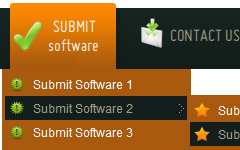
Submenus drop down over all the objects of the page (select, flash, object, embed).

Frontpage How To Create Tree Menu Text-based menu
You can create a menu with text-based top items. Such menu will be loaded more quickly on your website (in comparison with image-based navigation).
Menu structure is comprised of HTML nested UL and LI tags. Standards compliant menu structure is simple to customize and update.

Expression Web2 Drop Down Menu Fully Customizable
Every button or menu parameter can be easily customized in Expression Web Menu to fit your web site design and your needs. Create your very own html menus, as simple or as complex as you want!

Expression Make Dynamic Menu Delete Style In Expression Web 3 Size
You can set the size of the menu in pixels.

Css Drop Down Menus
Create drop down menus based on css using Expression Web Menu. Make various styles for each submenu item adjusting css styles.

Cross Browser Menu
Full cross-browser compatibility including IE, Netscape, Mozilla, Opera, Firefox, Konqueror and Safari


2.0 Buttons by Web-Buttons.com v3.0.0

How to use Vista Buttons with FrontPage

    To install the popup menu into your html page you should do the following things:

    1). Create and save your buttons in any temp folder using Vista Buttons application. You canuse "Save as HTML" function.
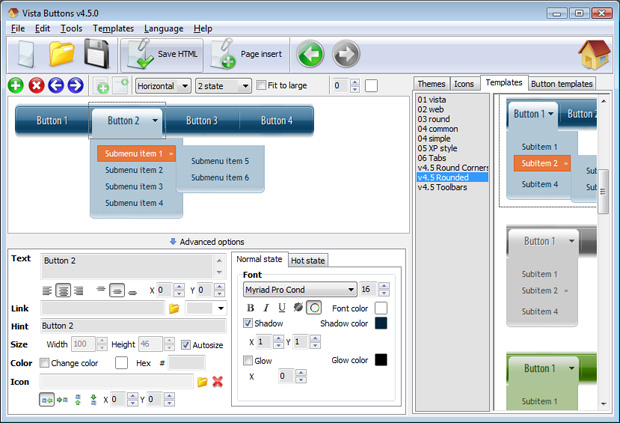
    Save menu

    You can enter any name you like, for example enter "menu":
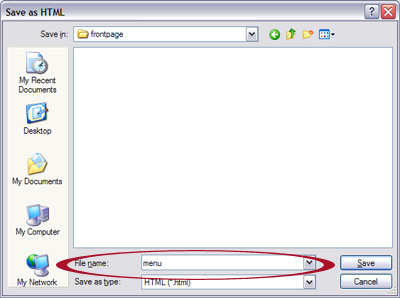
    Save menu name

    So you'll have menu.html file and "menu-files" folder with all menu files.
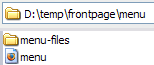
    Generated files

    2). You can add javascript popup menu to a single page or to many pages using Shared Borders, Include Page or Dynamic Web Template so that you won't have to add it into each page separately.

    Insert a popup menu to many pages using Dynamic Web Template in FrontPage

    - Start FrontPage and open your website. When the website opens, it should look like this:

    Open website in FrontPage

    - To create the Dynamic Web Template you should do the following things:
    Create a new folder in the root of your website, for example "menu". In this folder create a new Blank Page and name it menu.dwt.

    Dynamic Web Templates

    - Now you can add a menu in Dynamic Web Template. Open menu.dwt page (double-click menu.dwt in Folder list window) and switch to the Design view mode. Decide where you would like the popup menu to appear in your page. Click in the spot you want the code to appear in and type the phrase: your code

    Dynamic Web Templates add menu

    - Open the generated in Vista Buttons menu.htmlpage in any text editor. Copy all code within the following tags:
          <!-- Begin Vista-Buttons.com -->
            ...
          <!-- End Vista-Buttons.com -->

    - We will now be inserting the JavaScript code into the body section right where we typed the phrase in the previous step. To do this, switch to HTML View.

    - Go to the "Edit Menu" with FrontPage and select the "Paste" option to paste the menu code that we copied to the clipboard earlier. Since the phrase we typed was highlighted, it will be replaced when we paste the code in.

    Dynamic Web Templates add menu code

    - To display the mouseover state images correctly you should change vbImgPath parameter. Find the following code
    var vbImgPath="menu-files/"
    and change it to
    var vbImgPath="menu/menu-files/"

    Change path prefix in FrontPage

    - Now you should copy the "menu-files" folder into the same folder with your menu.dwt page.

    Copy menu files in FrontPage

    - Select the Preview mode to display the menu.dwt page live (in Internet Explorer). Notice that your mouseover images can be not displayed when you hover over menu items in the Preview mode. It is normal. You'll see all images when you open index.htm page in the Preview mode.

    Preview mode in FrontPage

    - Add editable regions to a Dynamic Web Template.
    a. Open the Dynamic Web Template (.dwt) file.
    b. In Page view, at the bottom of the document window, click Design.
    c. Put your cursor below the menu
    d. Right-click and then click Manage Editable Regions.
    e. In the Region name box, type a name for the editable region, for example, Header, Body, or Footer.
    f. Click Add, and then click Close.

    Dynamic Web Templates Editable Regions

    - Attach a Dynamic Web Template to your pages.
    a. Open the Web page you want to attach a Dynamic Web Template to.
    To attach the Dynamic Web Template to more than one page, select the pages you want.
         * In the Folder List, hold down CTRL and click each page you want.
         * If the Folder List is hidden, click Folder List on the View menu.
    b. On the Format menu, point to Dynamic Web Template, and then click Attach Dynamic Web Template.
    c. Locate and click the Dynamic Web Template (menu.dwt) you want to attach, and then click Open.
    d. In the appeared windows click "Ok" and then click "Close".

    Dynamic Web Templates Attach Template

    - That's all. You've added all necessary code to your page, so let's test it. Open your index page (double-click index.htm in Folder list window) and switch to the Preview mode.

    Result

    - If everything goes well, save and publish your website. If something seems wrong, double-check that you followed all the steps correctly.

    - If you still run into trouble, we'd be happy to assist you further. You can post your problem to us at , and meanwhile describe your files in details.


Support

Please contact Customer Support at (please include template name in the message title)


FAQ


See also

How to Create a Dynamic Web Template in Microsoft Expression Web Expression Webs dynamic web to go and change each web page one by one. Formats and styles Creating Dynamic Web Templates in Microsoft Expression Web; 3.

Publishing Your Web Site with Expression Web Web; Modify Style Dialog with Expression Web 3.0 want to delete them. If you are sure they are no longer needed, answer OK. If not, do some checking. NOTE: Expression Web

Expression Web 3.0 SuperPreview Expression Web 3.0 SuperPreview Tab on your keyboard to toggle into Expression Web 3. Double-click the styles the floating box problem and delete the

Expression-web-help, add styles tto the navigation Learn how to style Expression Web hyperlinks with Build Expression Web Template 3; Style horizontal Navigation with Delete all the text and type in #top_nav ul

Adding style to expression web menus part of an Expression Web tutorial detailing how to style Expression Web template 2; Build Expression Web Template 3; Style select New style. Select and delete

Locate unused files MSDN Library Design Tools Expression Studio 3 Expression Web 3 Working with hyperlinks Managing and repairing links Locate unused files

Create a master page Expression Web uses this content placeholder to include styles you interactively design. box, select the content placeholder you want to delete.

Using cascading style sheet tools Microsoft Expression Web provides you with a create, modify, apply, remove, or delete styles Expression Studio 3 Expression Web 3 Controlling appearances with styles

Expression� Web Design Blog you delete too much code or you delete the wrong code. In Expression Web the Microsoft .NET Framework 3 Expression Web adds a style to the image, specifically the

Microsoft Expression Studio Ultimate | Expression Studio Web Microsoft Expression home page, with product information, feature descriptions, community resources, downloads, upgrade information and more.

Expression Web FAQs Create a New Style (flash) Customizing Your Work Space (flash) Data Make sure you do not have Expression Web maximized 3. Drag the edge of the program window

How to Create a Dynamic Web Template in Microsoft Expression Web Expression Webs dynamic web to go and change each web page one by one. Formats and styles Creating Dynamic Web Templates in Microsoft Expression Web; 3.

Style toolbar in Microsoft Expression Web 3 : Saffron Stroke You must be familiar with the Apply Styles and Manage Styles panels (earlier known as Task Panes). The Style toolbar has fewer but similar functions.

Creating Hyperlinks and applying Styles to them in Microsoft Creating Hyperlinks and applying Styles to them in Microsoft Expression Web Preview Tools in Microsoft Expression Web 3 Setting with SQL Server, LINQ and ASP.NET 3.5 Delete

Expression Web FAQs Create a New Style (flash) Customizing Your Work Space (flash) Data Make sure you do not have Expression Web maximized 3. Drag the edge of the program window

Creating Styles and CSS in Expression Web Expression Web 3.0 Tutorials; Expression Web Links Creating Styles and CSS in Expression Web Expression Web provides you To delete a style from an open .css file, in the